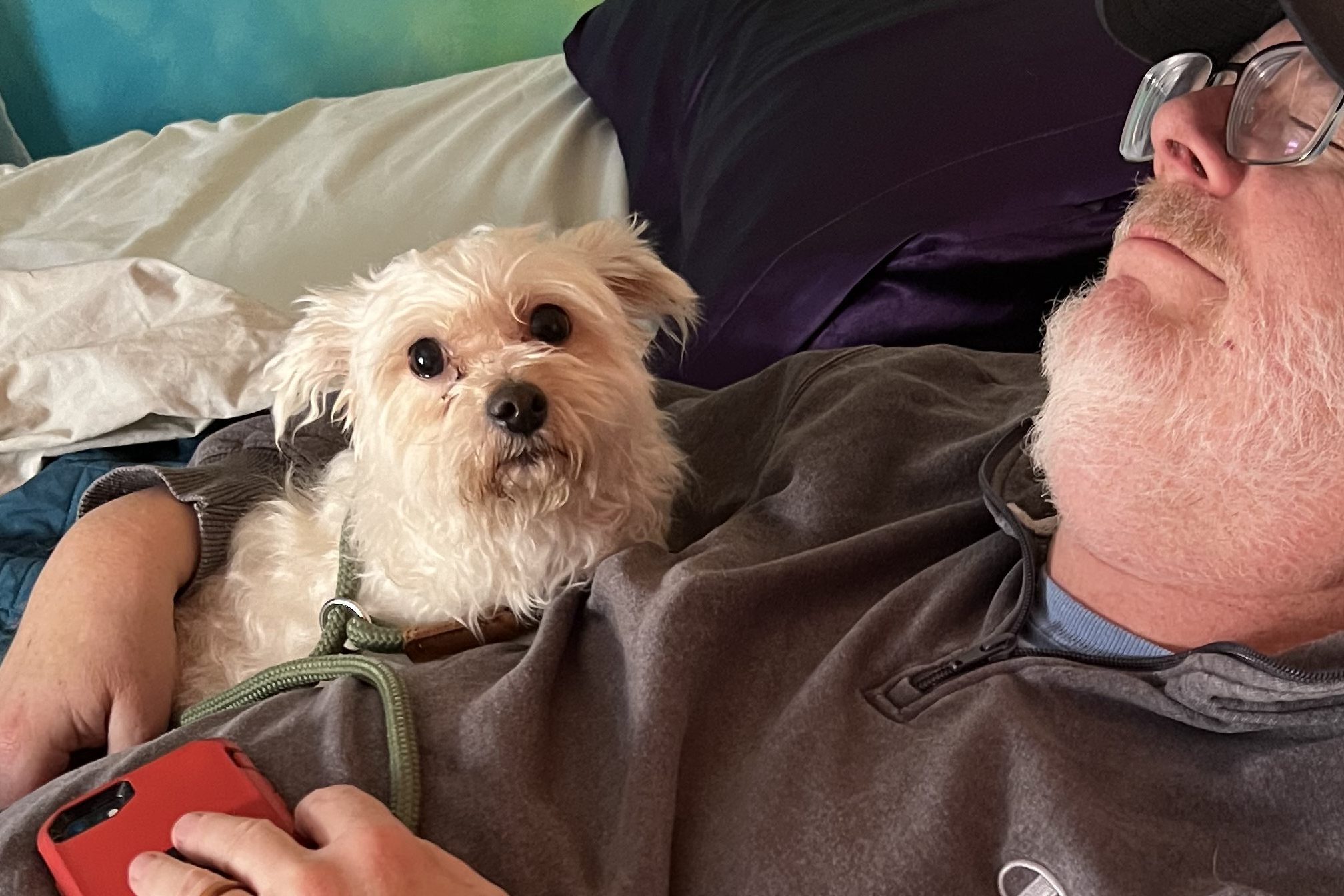
We are fostering a poodle mix for a few days this week while I’m on spring break. Lulu ended up at Paws and Claws because her human died. Lulu is a nice little dog, but she doesn’t like walking on a leash and has a reputation for fighting over food. We’re trying to help her correct these issues so she can find her forever home.
To solve these problems, we are tethering and hand-feeding her. I do this with all new dogs who enter my home, but it’s especially valuable for Lulu, because hand-feeding helps reduce resource guarding, and tethering helps teach dogs to respond to leash pressure.
These tools aren’t just good for shelter dogs. I recommend tethering and hand-feeding to all my clients before they start obedience training and any time the dog seems to need a refresher course.
If you’d like to try it with your dog, this is how you do it:
- Clip the dog’s leash to your belt with a carabiner.
- Keep the dog tethered to your belt as much as possible for the next week. If you have to go somewhere dogs are not welcome, put the dog in his crate. When you return, put him back on the tether.
- Instead of feeding your dog out of his bowl, put his food in a treat pouch and use it as a reward. Whenever the dog does something you like, immediately mark the behavior with either a click or a word such as “yes,” then follow with a bite of food. Whenever the dog does something you don’t like, correct it with a sharp “no” and/or a quick snap of the leash.
This process is a hassle, but it only lasts a week, and it pays big dividends; in my group classes, I can tell at a glance who tethered and hand-fed for a week and who didn’t.
If you’re in the Tucumcari area and would like to learn more about dog training, my next group class starts April 6; the signup form is here:
Signup form for Spring 2024 group class
Group classes are free for dogs adopted from local shelters and $50 for everybody else, with financial aid available for those who cannot afford the fee. All proceeds will be split between Paws and Claws and the Tucumcari Railroad Museum, which is hosting the class. If the dogs and their handlers have mastered loose-lead walking, sit, stay, recall, place, and mine by Week 5, we’ll have a “barkcuterie” party as our final exam the last week of class.
Participation is capped at 10 dog-handler teams. Sign up ASAP to reserve your slot!
 Tucumcari Dog Training
Leave a comment